The 33 Day Manifestation Program: A Daily Structure You Can Finish
By Clarity Books editorial team · 8 min read · Updated:
A 33 day manifestation program is a structured daily practice: one specific action, one fixed cue, and one place to record it, repeated for 33 straight days. The habit research explains why the window works: automaticity takes far longer than 21 days. This guide covers what a program day looks like and how to finish one.
What is a 33 day manifestation program?
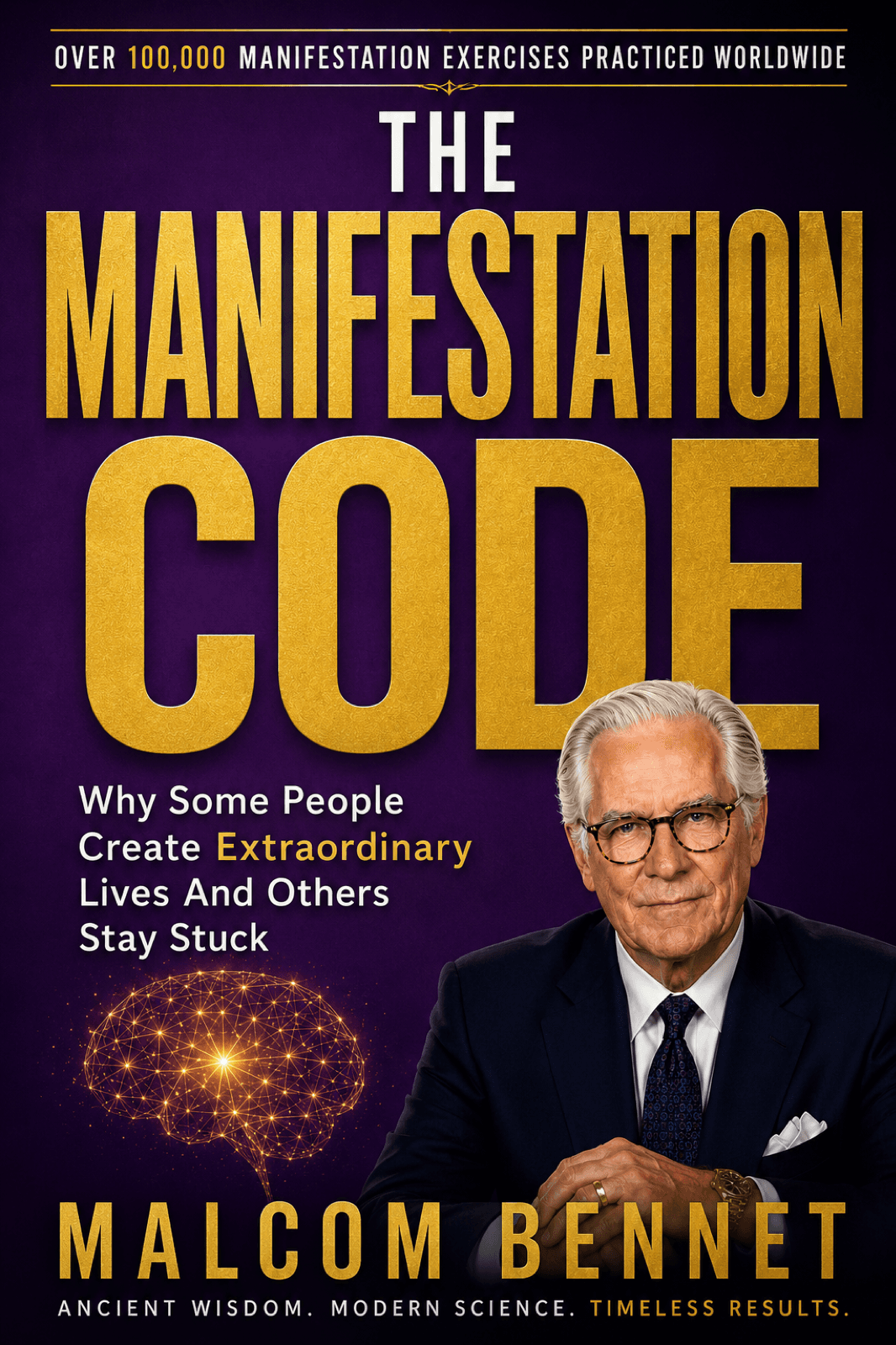
A 33 day manifestation program is a structured daily practice: one specific action, one fixed cue, and one place to record it, repeated for 33 straight days. Most people arrive after looser attempts stall: saved reels, a journal started twice, a habit that collapsed on day three. Our Clarity Books manifestation series is built exactly on this frame: The Manifestation Code book and a 33-day workbook, one identity-first practice per day (https://www.claritybooks.store/en/s/manifestation). The 369 writing ritual is a separate, optional thing, covered in our 369 method guide (https://www.claritybooks.store/en/articles/369-manifestation-method-explained).
Why do 33 day manifestation programs use 33 days?
Honest programs use 33 days as a demanding but survivable commitment window, and the habit research explains why it is a sensible checkpoint. In the best-known habit study, 96 volunteers practiced a self-chosen daily behavior in the same context for 12 weeks (Lally, van Jaarsveld, Potts, and Wardle, European Journal of Social Psychology, 2010, https://onlinelibrary.wiley.com/doi/10.1002/ejsp.674). Time to reach their automaticity plateau ranged from 18 to 254 days (European Journal of Social Psychology, 2010, same URL). UCL's write-up puts the average at 66 days (UCL News, 2009, https://www.ucl.ac.uk/news/2009/aug/how-long-does-it-take-form-habit). A 2024 systematic review of 20 studies found medians of 59 to 66 days, means of 106 to 154 days, and individual times from 4 to 335 days (Healthcare, 2024, https://pubmed.ncbi.nlm.nih.gov/39685110/). On our reading of those numbers, 33 days sits roughly halfway to that 66-day average. The "21 days" claim traces to anecdotal plastic-surgery observations rather than research (British Journal of General Practice, 2012, https://doi.org/10.3399/bjgp12x659466). Treat 33 days as a first complete cycle before you decide what comes next.
The workbook that runs the 33 days for you
Designing your own 33-day structure is possible, but most people stall on what to write and when, then lose momentum. The Manifestation Code 33-Day Workbook removes that friction. It is the daily companion that turns the method into a guided practice, with scripting pages, assumption drills, and prompts laid out day by day so you always know the next move.
Because the path is already sequenced, you spend your energy on the practice instead of on planning it, which is exactly what keeps people going past the drop-off point. If you want the full picture behind the drills, the Complete Manifestation Collection pairs the workbook with The Manifestation Code so the method and the daily reps live together, $27 together as the complete collection (https://www.claritybooks.store/en/products/complete-manifestation-collection). Taken together they form our Manifestation Code series, a single ordered path instead of scattered tips.
The Manifestation Code - 33-Day Workbook
Instant download · EPUB + PDF
The 33-day companion that turns the method into a daily practice. Guided prompts, scripting pages and assumption drills that install the new identity until it holds on its own.
Apple Pay, Google Pay and card accepted
Does a 33 day manifestation program guarantee results?
No, a 33-day structure does not guarantee results, and a promise of specific outcomes says more about the seller. A meta-analysis of 94 independent tests states plainly that a strong goal intention alone does not guarantee goal achievement, because people fail at self-regulation during pursuit (Gollwitzer and Sheeran, Advances in Experimental Social Psychology, 2006, https://kops.uni-konstanz.de/server/api/core/bitstreams/d4f710b4-a505-49ef-a831-5b8d7675100b/content). What research supports is the machinery a program should contain: specificity, written plans, consistent cues, and weekly reality checks. Neville Goddard drew on the same honesty in 1944 by omitting all testimonials and challenging the open-minded reader to practice rather than believe (Feeling Is the Secret, 1944, https://www.globalgreyebooks.com/online-ebooks/neville-goddard_feeling-is-the-secret_complete-text.html). Our evidence review covers that question directly (https://www.claritybooks.store/en/articles/does-manifestation-actually-work).
What does a day in a 33 day manifestation program look like?
A program day has four parts: a fixed cue, one written if-then action, a state practice, and a record. The cue is a daily event such as before your first coffee, because habits attach to consistent settings (Gardner, Lally, and Wardle, British Journal of General Practice, 2012, https://doi.org/10.3399/bjgp12x659466). The written action is one if-then sentence, such as "when I sit down at my desk, I will write my assumption once," the format with a medium-to-large effect (d = .65) across 94 tests (Gollwitzer and Sheeran, 2006, URL above). Writing the goal and committing to it is the impulse behind the research that debunked the famous "3 percent with written goals" study, which turned out never to have been done (Matthews, Dominican University of California, 2007, https://scholar.dominican.edu/psychology-faculty-conference-presentations/3). The state practice is the assumption itself, in Neville's words feeling the wish "as a state that is rather than a state that is not," in the drowsy state near sleep, which Neville treats as a gateway into the subconscious (Feeling Is the Secret, 1944, URL above). The record is a single tick or line, which makes the weekly review possible. Once a week, name the obstacle that appeared, because pairing the desired future with present obstacles creates direction and energy (Oettingen and Reininger, Social and Personality Psychology Compass, 2016, doi 10.1111/j.1475-6811.2006.00130.x).
Why do people quit a 33 day program in week two?
Week two is where motivation runs out, and the first defense is knowing that one missed day is survivable. In Lally's diary study, missing one opportunity did not materially affect habit formation, though very inconsistent people did not succeed (Lally et al., 2010, https://onlinelibrary.wiley.com/doi/10.1002/ejsp.674; UCL News, 2009, https://www.ucl.ac.uk/news/2009/aug/how-long-does-it-take-form-habit). The real failure mode is the story you tell yourself after a missed day, when quitting starts to look reasonable. Three defenses come from that research: keep the action small, because simple actions such as drinking water became automatic faster than elaborate routines (Gardner et al., 2012, https://doi.org/10.3399/bjgp12x659466); keep the cue identical every day, because habitual behavior in the diary research meant actions performed almost daily in stable contexts (Wood, Quinn, and Kashy, Journal of Personality and Social Psychology, 2002, doi 10.1037/0033-2909.128.2.218); resist the urge to upgrade your goals mid-program, since intention strength alone carried only part of the behavior (Gollwitzer and Sheeran, 2006, URL above). The week-one collapse pattern is unpacked in our article on why practice stalls after three days (https://www.claritybooks.store/en/articles/why-manifestation-stops-working-after-three-days).
Is a 33 day program the same thing as the 369 method?
No, a 33-day program is not the 369 method, though the search results blur them. The 369 method is a writing schedule: the same statement three times in the morning, six in the afternoon, and nine at night (TrueCosmic, 2026, https://truecosmic.com/the-369-manifestation-method-what-it-is-does-it-work-and-what-the-evidence-says/). It spread through social media in the early 2020s as a modern arrangement of older written-affirmation practice (369 Rituals Journal, 2026, https://369rituals.com/why-3-6-9-tesla-key-to-the-universe/). Tesla's quote about the magnificence of 3, 6 and 9 has no traceable primary source in his writings, patents, or interviews (TrueCosmic, 2026, same URL). There is likewise no evidence that the digits 3, 6, and 9 carry any causal effect; the evidenced benefit comes from the schedule's specificity, writing, and consistency (TrueCosmic, 2026, same URL). A 33-day program is the larger structure, and a writing ritual can sit inside it as one component.
How do you choose a 33 day manifestation program you will actually finish?
Choose a program that names its daily action, fixes its cue, includes a weekly review, and states its limits honestly. A named action beats a vague instruction, because specific plans spelling out when, where, and how are the format the goal-striving research validated (Gollwitzer and Sheeran, 2006, URL above). A fixed cue beats a reminder, because stable contexts are what made behavior habitual in the diary research (Wood et al., 2002, URL above). Then ask one question of any seller's page: does it describe a practice you can picture doing at a specific time and place tomorrow? A page that only describes the life you will have afterward is selling fantasy, and fantasy predicted less effort and worse performance across graduates seeking work, students before an exam, and hip-replacement surgery patients (Oettingen and Mayer, Journal of Personality and Social Psychology, 2002, https://pubmed.ncbi.nlm.nih.gov/12416922/). It applies inside the ritual too: positive thinking about the future decreases energy and impairs performance across work, relationships, and health (Oettingen and Reininger, 2016, doi 10.1111/j.1475-6811.2006.00130.x). Our series follows this checklist with the book plus workbook (https://www.claritybooks.store/en/s/manifestation).
What happens after day 33?
Day 33 is a checkpoint, and what you do with the record matters more than the count itself. Review the record first: 33 days of ticks on a consistent cue is real progress, and automaticity keeps building toward the 66-day average (Lally et al., 2010, https://onlinelibrary.wiley.com/doi/10.1002/ejsp.674). Then decide deliberately whether the practice continues, changes, or ends, because the UCL interview's core advice is to specify the behavior, repeat it consistently, and let ease arrive over time (UCL News, 2009, https://www.ucl.ac.uk/news/2009/aug/how-long-does-it-take-form-habit). For deeper method grounding, our step-by-step guide to Neville's classical method is the next read (https://www.claritybooks.store/en/articles/neville-goddard-method-step-by-step), and the full topic guide collects the series in one place (https://www.claritybooks.store/en/guides/manifestation).
Frequently asked questions
Does a 33 day manifestation program work?
It works as a structure for attention, daily behavior, and identity, which is what the goal-setting and habit research supports; it does not guarantee specific outcomes, and no honest program claims otherwise.
Can I skip a day in a 33 day program?
Yes, missing one opportunity did not materially affect habit formation in the UCL study; resume the next day rather than restarting the count, but stay consistent overall because chronic inconsistency led to failure.
What should I do after finishing 33 days?
Review your record, decide deliberately whether to continue toward the 66-day automaticity mark, and adjust the daily action based on what your weekly reviews showed about obstacles.
Do I have to use the 369 method inside a 33 day program?
No, the 369 writing schedule is optional; its Tesla attribution is unverifiable, the digits have no evidenced effect, and any consistent written ritual serves the same function.
Want the whole series? the complete The Manifestation Code bundle (2 guides in one download) or browse every The Manifestation Code guide.
Stuck on a manifestation? Start here.
Get the free 7 Manifestation Blockers Checklist: the patterns that most often stall a practice, named in one page.
No spam. Unsubscribe anytime.