Active vs Passive Income, Explained Without the Hype
By Clarity Books editorial team · 4 min read · Updated:
Active income trades your time for money, while passive income requires heavy upfront work or capital before it pays with less ongoing time. Truly hands-off income is rare, so most people build a mix that gradually shifts toward passive over years rather than flipping a switch and stopping work.
Honest Definitions
Active income is money you earn by directly trading your time and effort: a salary, freelance work, a service business where the work stops when you do. Passive income is money that keeps arriving with little ongoing time once it is established, such as royalties, rentals, or a product that sells while you sleep. The key word is established.
The line between them is blurrier than the labels suggest. Almost everything called passive started as intensely active, and most passive income still needs maintenance to keep flowing. Understanding both as a spectrum rather than two boxes is what protects you from the common fantasy that passive means effortless from day one.
The Hidden Upfront Cost of Passive
Passive income has a cost that the marketing carefully hides: the heavy work or capital required before it pays anything at all. A book takes months to write before the first royalty. A rental needs a large purchase and ongoing management. A product needs building, testing, and an audience. The income is back-loaded, but the effort is front-loaded.
This is why most overnight passive income stories are either luck, survivorship bias, or quiet omission of years of unpaid work. There is nothing wrong with passive income as a goal. The honesty problem comes from skipping the upfront phase in the telling. Plan for the front-loaded cost and passive income becomes realistic rather than a recurring disappointment.
Diversifying the Right Way
A sound approach treats active income as the engine that funds the building of passive income. You use the reliable cash from active work to invest time or money into assets that will eventually need less of both. Over years, the balance shifts, but active income almost always comes first, because it pays for the patience passive income requires.
Our Wealth Building Blueprint Vol II, Income Streams, lays out how to diversify in this grounded way, choosing which streams to build, in what order, and how to fund the slower passive ones with active cash. If you want the surrounding pieces too, mindset, cash flow, and acceleration, the Complete Wealth Building Blueprint bundles all four volumes for less than buying them on their own. These volumes form our Wealth Building Blueprint series, a deliberate progression from mindset to acceleration instead of disconnected advice.
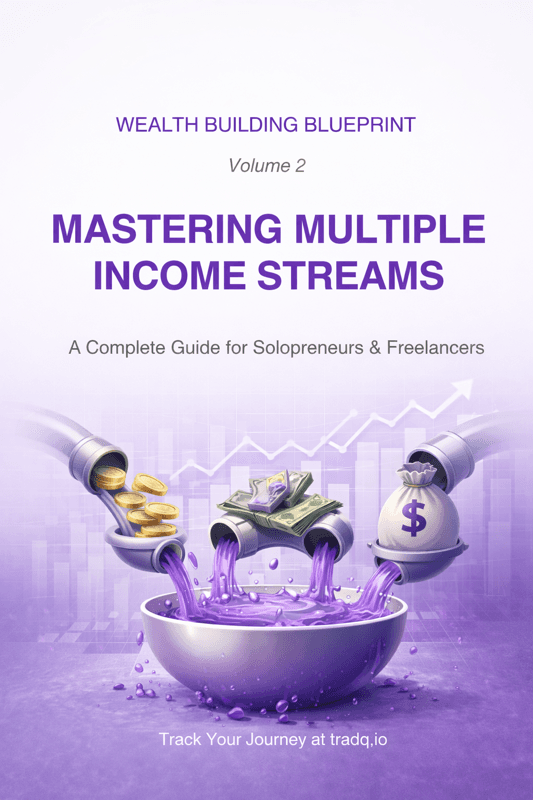
Wealth Building Blueprint Vol II - Income Streams
Instant download · EPUB + PDF
Diversify your income. Learn to build multiple revenue streams that work together to accelerate wealth.
Apple Pay, Google Pay and card accepted
A Realistic Active-to-Passive Path
A realistic path looks like this: stabilize active income, carve out a slice of time or money, and invest it into one passive-leaning asset. Let that asset mature while your active income keeps the lights on. Repeat. The shift toward passive happens gradually, asset by asset, not in a single dramatic leap away from working.
In 2026, passive income is one of the most overpromised ideas online, which makes a clear-eyed approach a genuine advantage. You are not aiming to never work again next month. You are building, patiently, a base of assets that reduce how much your income depends on your hours, which is a real and achievable version of the dream.
Frequently asked questions
Is passive income really passive?
Rarely in the way the word implies. Most passive income needs heavy upfront work or capital to create and ongoing maintenance to sustain. It becomes lower-effort once established, but truly hands-off income is uncommon. Treat passive as low-ongoing-time after a real building phase, not as effortless.
Should I focus on active or passive income first?
Usually active first, because it funds the patience passive income requires. Reliable active cash lets you invest time or money into slower passive assets without risking your stability. Over years the balance shifts toward passive, but active income is what makes that gradual shift possible.
How long until passive income actually pays?
It varies widely by asset and effort, often months to years before meaningful returns. The income is back-loaded while the work is front-loaded. Planning for that gap, rather than expecting fast results, is what separates a realistic passive plan from a disappointing one.
Want the whole series? the complete Wealth Building Blueprint bundle (4 guides in one download) or browse every Wealth Building Blueprint guide.
Before you buy, look inside:
Look inside Wealth Building Blueprint Vol II - Income Streams →