How Much Emergency Food and Water to Store (US Households)
By Clarity Books editorial team · 4 min read · Updated:
A practical US emergency store holds at least one gallon of water per person per day for several days, plus shelf-stable food you actually eat, rotated regularly so nothing expires unused. Scale the totals to your household size and local risk, and build toward two weeks as space and budget allow.
How Much Water and Food
Water comes first because you can go far longer without food than without it. Ready.gov recommends at least one gallon per person per day, covering drinking and basic hygiene, for a minimum of three days. Multiply that by everyone in your home, including pets, and add extra for hot climates, nursing parents, or anyone who is ill. A family of four planning for three days needs at least twelve gallons.
For food, store shelf-stable items your family already eats: canned proteins and vegetables, peanut butter, rice, pasta, oats, and ready-to-eat meals that need no cooking. Aim for three days at a baseline and two weeks if you can manage the space. Choosing familiar foods matters, because an emergency is no time to discover nobody will eat the supplies you bought.
Rotation and Storage
A stockpile is only as good as its freshness. Use the first-in, first-out method: place newer purchases behind older ones and eat from the front so the supply cycles through your normal meals. Mark purchase or use-by dates with a marker, and check the whole store twice a year. Commercial water has a long shelf life, but rotate it on the dates printed, and replace home-filled containers every six months.
Store everything cool, dark, and dry, away from fuel, cleaning chemicals, and direct sun, which degrade both food and packaging. Keep at least part of your supply somewhere you can reach quickly if you must evacuate. Heavy water is hard to carry, so pair a larger home reserve with a few portable, grab-and-go containers for the car.
See the Stocking Guidance in the US Guide
Quantities are only half the picture. Knowing how to build a two-week reserve without overspending, how to store it in a small apartment, and how to plan around dietary needs and medications takes a fuller method. Ready For Anything, United States Edition covers stocking in depth with US-specific guidance, including how to size your store to your region's most likely and longest outages.
The guide pairs the food and water plan with the rest of your preparedness so your supplies fit a complete household plan rather than sitting in isolation. If you split time across regions or want every edition, the Complete Ready For Anything Collection bundles them for less than buying separately. Start with the US edition to right-size your home reserve first. This food and water guide is the quick start, and our Ready For Anything series turns it into a complete US household plan.
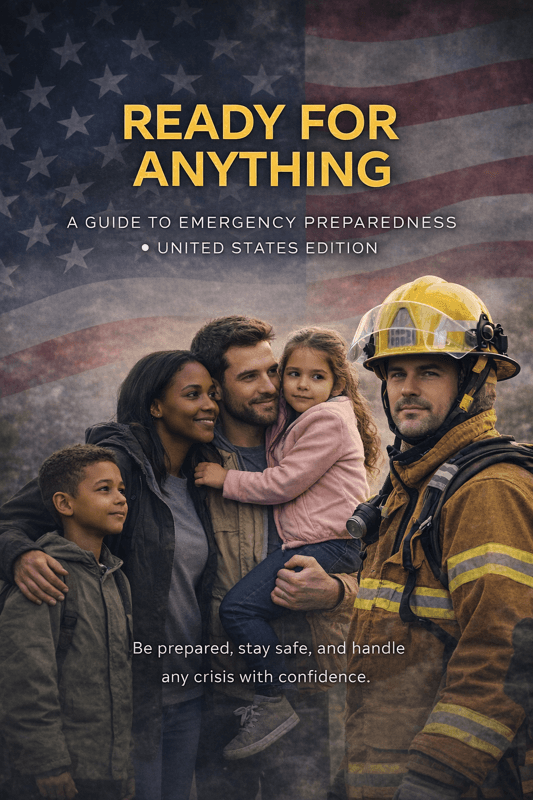
Ready For Anything - United States Edition
Instant download · EPUB + PDF
A comprehensive guide to emergency preparedness tailored for the United States. Be prepared, stay safe, and handle any crisis with confidence.
Apple Pay, Google Pay and card accepted
Do It on a Budget
You do not need to spend a fortune at once. Add a few extra shelf-stable items to each normal grocery trip and the reserve grows painlessly over a couple of months. Buy store brands, watch for sales on canned goods, and refill clean containers with tap water rather than buying bottled when your municipal supply is safe. Small, steady additions beat one expensive panic-buy.
Prioritize calories, protein, and water over specialty survival products that cost more per serving. A pantry of familiar, affordable food rotated through your meals is both cheaper and more reliable than gear you never test. With 2026 supply-chain and cost-of-living pressure on many households, a budget-built reserve is preparedness you can actually sustain.
Frequently asked questions
How much water does a family of four need for three days?
At least twelve gallons, based on one gallon per person per day for drinking and hygiene. Add more for hot weather, infants, nursing parents, pets, or anyone unwell. If you have the space, building toward a two-week reserve gives a comfortable margin for longer US outages.
Can I store tap water, or do I need to buy bottled?
If your municipal water is safe, you can fill clean, food-grade containers from the tap and replace them about every six months. Commercial bottled water keeps longer and is convenient for grab-and-go bags. Many households use both: tap-filled containers at home and a few bottled cases for the car.
What food lasts longest in an emergency stockpile?
Canned goods, dried beans, rice, pasta, oats, peanut butter, and shelf-stable ready meals all last well and need little or no cooking. Choose items your family already eats, rotate them through normal meals, and check dates twice a year so nothing expires unused.
Want the whole series? the complete Ready For Anything bundle (3 guides in one download) or browse every Ready For Anything guide.
Before you buy, look inside:
Look inside Ready For Anything - United States Edition →