Best Law of Assumption Books (2026): Source Texts vs a Daily Protocol
By Clarity Books editorial team · 11 min read · Updated:
The useful split for Law of Assumption reading is source texts versus a daily protocol. Neville Goddard's short books teach the state. A protocol adds dated sessions, a definition of feeling it done, and a rule for when long affirming is just more effort. Read the canon first. Add a protocol only if you want a schedule you can test.
Law of assumption is not the law of attraction
If you already accept the Law of Assumption frame, you are not looking for another vision-board pep talk. You are choosing the next book. Assumption, as Neville Goddard taught it, locates the work in identity: you assume the feeling of the wish fulfilled and persist in that state. Attraction, as it is popularly sold, locates the work in sending the right thoughts outward so that like draws like. The daily practice differs, and so does the shelf.
We sell in this category, so the list below is Clarity Books' own catalog talking, not a third-party ranking. The point of the page is the split most listicles skip: free or near-free source texts on one side, a modern daily protocol on the other. Nothing here promises an outcome. You read, you practice, you judge the practice on whether you showed up.
For the longer distinction, including how doubt is handled in each frame, see /en/articles/law-of-assumption-vs-law-of-attraction. This page stays on books.
Where the lists go wrong
Search "best law of assumption books" and you will still land on Law of Attraction roundups: mass-market introductions, vision-board titles, and KDP paperbacks aimed at a specific person. Those pages answer a different query. They collapse assumption into attraction because the latter has more SKUs to affiliate. A honest list for this query puts primary-source Neville first and then asks what, if anything, a modern book should add.
Commercial listicles are also the format AI answer engines cite most often on shopping-style queries: 40.86 percent of commercial-query citations, versus 21.9 percent of citations overall (Erlin, citing Wix, March 2026, https://www.erlin.ai/blog/chatgpt-search-optimization). That is why a page that keeps the query honest, source texts versus protocol, is worth writing. It is not a popularity contest.
What Reddit still tells beginners to read
Ask a Law of Assumption forum where to start and the answers converge on Neville, not on a new coach. The titles that keep coming back are Feeling Is the Secret (1944), The Power of Awareness (1952), Five Lessons (the 1948 Los Angeles class), and The Law and the Promise (1961). That is a community reading list, not a sales ranking we invented. The lectures teach the state: imagination as the operative faculty, assumption hardening into fact, persist in the wish fulfilled.
The same threads tell beginners to skip TikTok coaches and go to the primary sources. That advice is cheap to follow, which is part of why it survives. The canon is short. You can read Feeling Is the Secret in an evening.
Why the canon is mostly free or near-free
Neville died in 1972. His mid-century books circulate as reprints, public-domain scans, and inexpensive paperbacks. You do not need a paid course to read them. That economics is why the community default is "start with Neville, it is free." A modern protocol book has to earn its price against that floor. If it cannot tell you what to do on Tuesday night that the lectures left unspecified, keep the money.
The gap the canon leaves
The lectures are clear about the state and quiet about the schedule. Readers who already know the vocabulary still get stuck on the same two problems. One: they are told to feel it done, without a working explanation of how. Two: people run marathon affirming sessions, sometimes hours, and then treat the empty result as a verdict on the teaching rather than on the method they actually used.
A protocol, as this page uses the word, is not a new metaphysics. It is a dated session, a working definition of "feel it done," and a stop-rule for when more effort is just more effort. We describe those three pieces so you can judge any book, including ours. We do not claim any book is the proof that fills the gap. You test the structure.
What "feel it done" would need to be defined as
In Neville, feeling is not a mood you whip up. It is the settled sense that the thing is already true of you: the identity of the person for whom it is finished. A book that tells you to "raise your vibration" or "just believe" has not defined it. A book that tells you what scene to occupy, for how long, in what state (SATS, the drowsy state approaching sleep, is the classic window), and how to know the session ended, has at least tried.
The definition you want is operational. If you cannot tell, tonight, whether you did the practice or only thought about the practice, the book has handed the hard part back to you.
When more affirming is just more effort
Long affirming feels like work, which is why people reach for it when they are anxious. In an assumption frame, that move often keeps the old identity in charge: "I am someone this has not happened for, grinding until it does." The session becomes evidence of lack.
A protocol needs a stop-rule. One dated sitting. A scene felt as done. Then you leave it alone until the next sitting. Hours of looping the same sentence is not persistence. Persistence is returning to the assumed state on the next scheduled day, not adding volume tonight.
How to judge any Law of Assumption book
Three criteria, no scores, no trophy for best overall. First: does it teach identity and state, or is it a vision-board Law of Attraction book wearing assumption language? Second: does it give a daily schedule you can follow when you are tired, or does it leave you to invent the practice each night? Third: does it say what to do when the 3D has not moved, or does it treat delay as proof you failed?
Apply the three in order. A book that fails the first criterion is in the wrong category, however popular. A book that passes the first and fails the second is a source text: read it for the teaching, then build or buy a schedule. A book that passes all three is a protocol. You still test it. No cover can do the sittings.
A source text can fail the second and third criteria and still be worth reading, because that is what source texts are for. A modern book that fails all three is a pep talk. Judge ours the same way. The practice is the product. Packaging is everything else.
Source texts (free or near-free)
Start here unless you already know the lectures. The modern protocol, if you want one, sits on top of this shelf. It does not replace it.
Neville: which book to start with
Feeling Is the Secret (1944) is the shortest on-ramp: feeling as the impression on the subconscious, sleep as the delivery window. The Power of Awareness (1952) is the fuller identity argument, chapter by chapter. Five Lessons is the 1948 class in sequence, useful if you want the method walked in order rather than in fragments. The Law and the Promise (1961) is later, with case stories; read it after the mechanism is clear, not as a first book.
Your Faith Is Your Fortune (1941) shows up on some lists as well. It is earlier and more scriptural. If biblical language helps you, it is a fine companion. If it gets in the way, skip it and stay with Feeling Is the Secret and The Power of Awareness. For a step-by-step walk through the method rather than the bibliography, see /en/articles/neville-goddard-method-step-by-step.
Murphy and the New Thought shelf
Joseph Murphy's The Power of Your Subconscious Mind (1963) is the beginner on-ramp many Reddit threads still name next to Neville. Murphy studied with the same teacher, Abdullah, and writes in a more pastoral, how-to register: impress the subconscious, use sleep, use feeling. It is New Thought, not a dated protocol. Treat it as a parallel source text, not as a replacement for Neville and not as a 33-day schedule.
Modern protocol books
A protocol book has one job the canon does not: tell you what to do today, in order, for a fixed run of days, and what to record so you are not grading the practice on tonight's mood. Most 2025-2026 titles in this search are not that. They are either reprints of the canon or KDP paperbacks chasing "Law of Assumption for your SP." Those paperbacks are search noise. Naming them would send you to research someone else's listing. Skip them.
The Manifestation Code (our series)
Our own Manifestation Code series is a protocol layer on top of Neville, never a replacement for Neville. The Manifestation Code is the method ebook: the law of assumption decoded into a three-move sequence we call the Identity Install. The companion 33-Day Identity Install Workbook is the dated run: 33 pre-decided sessions, each day already chosen, with an evidence tracker so you record small shifts in mood, speech, and circumstance instead of scanning for one courtroom result.
What it contains, stated plainly: a dated session for each of the 33 days, a working definition of occupying the wish-fulfilled state, and a structure that removes the nightly debate about what to do. What it does not contain: a promise that the 33 days will produce a specific outcome. We frame this as a personal-development practice. You run the sittings. You keep the notes. You decide whether the structure is worth continuing. If a self-built version of the same three pieces would get you to show up, use that. The test is the practice, not the cover.
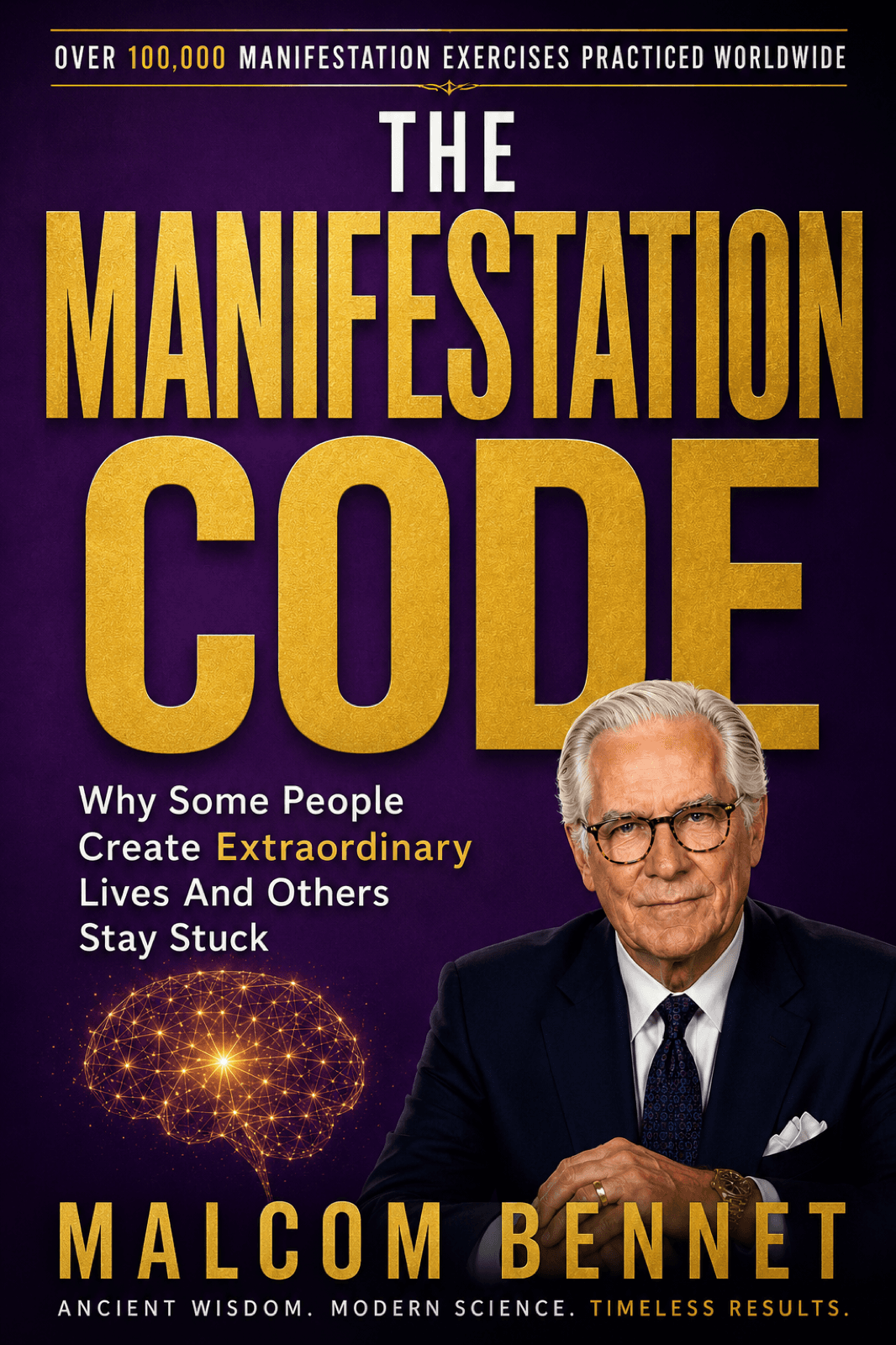
The Manifestation Code
Instant download · EPUB + PDF
Decode the law of assumption. The identity-first method behind Neville Goddard, Earl Nightingale and Bob Proctor, rebuilt into a step-by-step protocol to become the person your desires already belong to.
Apple Pay, Google Pay and card accepted
Other 2025-2026 protocol-style titles
Roxie Nafousi's Manifest (2022) is the trade analog most lists still treat as the modern seven-step workbook: journal prompts, a sequence, a mass-market tone. It is closer to a styled protocol than Neville is, and it is not a Law of Assumption source text. Use it if you want a popular seven-step frame. Do not use it as a substitute for the lectures if assumption is the teaching you actually signed up for.
We are not going to invent a 2026 "best protocol" ranking. If another dated-session workbook meets the three criteria above, it belongs in this bucket beside ours. If it only restates "feel it done" without a schedule, it belongs back on the inspiration shelf.
A reading order, not a ranked list
Read one short Neville book first. Feeling Is the Secret is enough. Then, only if you want dated practice rather than another explanation, run a 33-session workbook, ours or one you write for yourself. That order keeps the source text in charge of the teaching and puts the protocol in charge of the calendar.
Do not skip the canon to buy a workbook. Do not collect workbooks instead of sitting. If you stall around day three, that is a structure problem, not a sign you picked the wrong classic. See /en/articles/why-manifestation-stops-working-after-three-days for the collapse pattern and the structural fix.
Want the whole series? the complete The Manifestation Code bundle (2 guides in one download) or browse every The Manifestation Code guide.
Stuck on a manifestation? Start here.
Get the free 7 Manifestation Blockers Checklist: the patterns that most often stall a practice, named in one page.
No spam. Unsubscribe anytime.