Do I Need to Learn Python for AI? Not if You Are Using It, Not Building It
By Clarity Books editorial team · 3 min read · Updated:
Whether you need Python for AI depends on what you are trying to do. To use AI for work, automation, and content, you do not need Python; prompting and verification carry you. To train or fine-tune models as an engineer, Python is the standard. Decide by your goal, not by the hype.
The decision rule most advice skips
Search results split into two camps that talk past each other. One says Python is essential for AI; the other says no-code tools make it optional. Both are right for different people, and neither states the rule that settles it.
The rule: are you using AI or building models? If your goal is to apply AI to real work, draft and analyze, and automate tasks, you are a user, and prompting plus verification get you most of the way with no code. If your goal is to train, fine-tune, or deploy custom models, you are building, and Python is the working standard. Pick your camp before you pick a course.
The scale of the two camps is lopsided. Most people meeting AI are users, not builders: 34 percent of US adults said they had used ChatGPT by early 2025, and among employed adults the share using it for work reached 28 percent (Pew Research Center, 2025, https://www.pewresearch.org/short-reads/2025/06/25/34-of-us-adults-have-used-chatgpt-about-double-the-share-in-2023/). The building camp is smaller and capital-heavy, drawing US private AI investment of 109.1 billion dollars in 2024 (Stanford HAI, 2025 AI Index Report, https://hai.stanford.edu/ai-index/2025-ai-index-report/economy). You can join the first camp this week without writing a line of Python.
What to learn first if you are a user
Start with prompting: stating tasks clearly, giving context, and showing the format you want. Add verification next, because a confident wrong answer is the main risk for a non-coder. Then connect steps with no-code automation tools that handle the wiring for you.
Our AI Mastery Guide series is sequenced for exactly this reader. It builds prompting and verification before anything technical, and treats code as an optional later lever rather than a prerequisite, so a non-programmer reaches working automations without detouring through Python.
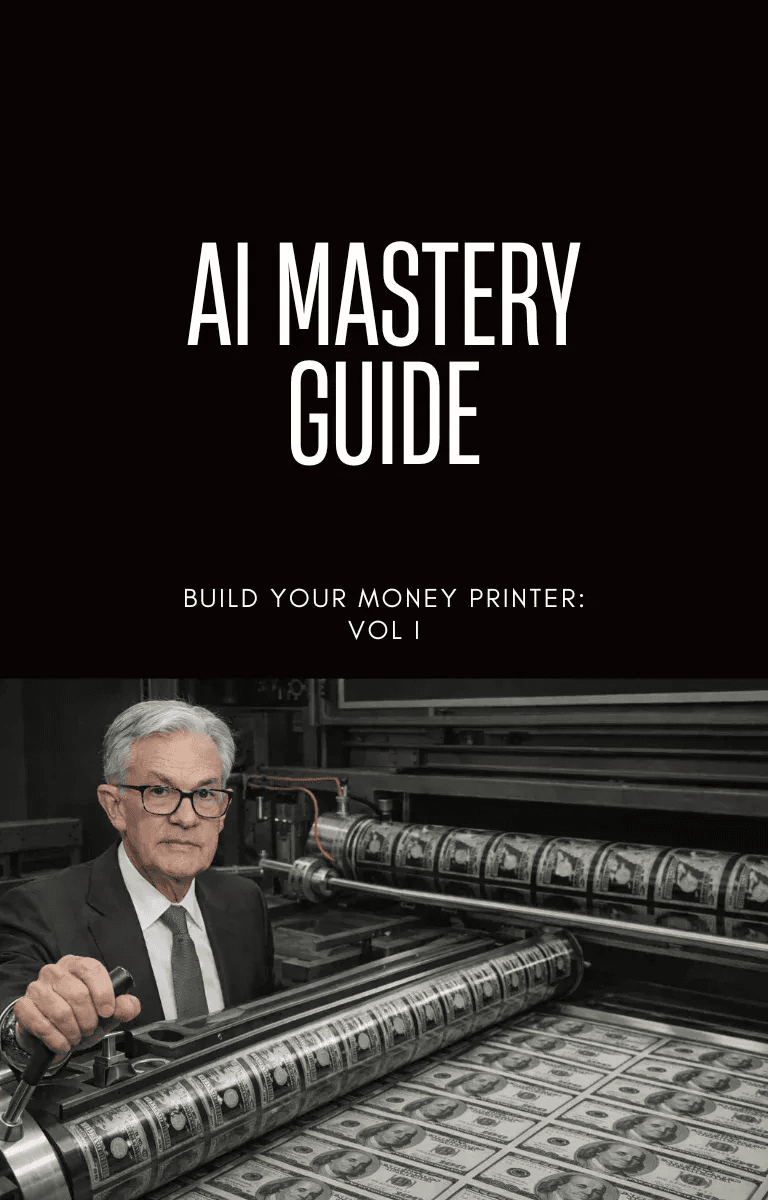
AI Mastery Guide Vol I
Instant download · EPUB + PDF
Your foundation in AI. Master the fundamentals of prompt engineering, understand how AI thinks, and build your first automated workflows.
Apple Pay, Google Pay and card accepted
When Python genuinely earns its place
Python becomes worth the investment when you want to fine-tune a model on your own data, build a product around model calls, process large volumes programmatically, or work as an ML engineer. At that point the language and its libraries are the path of least resistance, and they pay back the learning curve.
Even then, strong prompting and verification habits come first. They make you a better builder, not just a better user, because you will know what a good output looks like before you automate the production of thousands of them.
Frequently asked questions
Can I get an AI-related job without Python?
Yes, for many roles. Prompt-focused, content, and automation roles reward clear instruction and verification over coding. Engineering roles that train or deploy models do expect Python. Match the skill to the job you actually want.
Will AI write the Python for me, so I can skip learning it?
AI can draft code, but you still need enough understanding to judge, test, and fix it. For pure usage you can skip Python entirely. For building, treat AI as an accelerator on top of real fundamentals, not a replacement for them.
If I only learn one skill first, what should it be?
Prompting paired with verification. It is the highest-leverage skill for every AI user, it requires no code, and it makes you a sharper builder later if you do decide to learn Python.
Want the whole series? the complete AI Mastery Guide bundle (4 guides in one download) or browse every AI Mastery Guide guide.
Before you buy, look inside:
Look inside AI Mastery Guide Vol I →