How to Write a Resume for Remote Jobs in 2026
By Clarity Books editorial team · 4 min read · Updated:
A remote-ready resume foregrounds self-direction, written communication, and tool fluency, names remote experience explicitly, and is structured so applicant tracking systems parse it cleanly. For remote roles, clear evidence of independent output matters more than years in an office, so lead with results you delivered on your own.
What Remote Employers Actually Screen For
Hiring managers for remote roles read a resume looking for one core question: can this person do the job well without someone standing over them? They scan for proof of self-direction, written clarity, and comfort with the tools distributed teams run on, and an office resume full of vague team verbs hides exactly those signals. Make them obvious instead. Name the remote work you have done, the tools you coordinated it with, and the outcomes you owned end to end. A line like "ran a weekly reporting process across three time zones with no in-person check-ins" tells a remote employer more than any list of soft-skill adjectives, because evidence of independent output is the one thing they cannot screen for any other way.
Structuring for ATS and the Six-Second Skim
Most remote applications pass through an applicant tracking system before a human sees them, and in 2026 those parsers are sharper than ever. Use a clean single-column layout, standard section headings, and the exact keywords from the job post, and skip graphics, columns, and tables that scramble text extraction, because a file the parser cannot read will not move forward no matter how strong you are. Write for the human who reads next, too. Recruiters skim the top third first, so put your strongest remote-relevant results there rather than under a generic summary, lead each role with the outcome, then the method, then the scale, and quantify wherever you honestly can, since a number anchors attention and survives the fast first pass.
Landing the Role, Step by Step
A resume opens the door, but landing a remote role is a full process of positioning, applications, interviews, and the offer, and our Remote Work Domination series maps that path. Volume I, Land The Dream Job, walks through building a remote-ready profile, finding roles that hire across borders, and presenting your experience so distributed teams trust you to deliver from day one. If you want the whole journey rather than a single stage, the Complete Remote Work Collection bundles every volume below the cost of buying them separately. Start with Volume I to turn a scattered job hunt into an ordered system, then continue through the series as you move from landing a role to growing inside it.
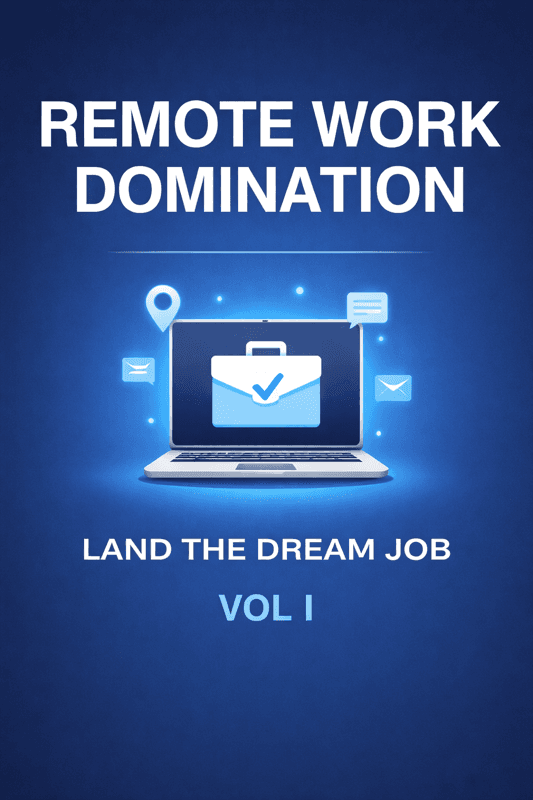
Remote Work Domination Vol I - Land The Dream Job
Instant download · EPUB + PDF
Get hired for high-paying remote positions. Resume optimization, interview mastery, and negotiation tactics.
Apple Pay, Google Pay and card accepted
Tailoring the Resume for Each Application
One generic resume sent to fifty postings underperforms a focused one sent to ten. For each role, mirror the language the company uses for the work, reorder your bullets so the most relevant remote experience sits at the top, and cut anything that does not support that specific job. This takes minutes per application and lifts your response rate far more than volume does. Keep a master document with every result and tool you have, then assemble each tailored version from it, which is faster than rewriting from scratch and keeps your strongest material one paste away. In a 2026 market flooded with AI-generated applications, a resume that clearly matches the role and reads like a real person stands out precisely because so many do not.
Frequently asked questions
Should I say I want remote work directly on my resume?
Yes. State your remote experience and preference plainly, in your summary and within roles. Remote employers want to see that you have worked this way before and chose it deliberately, so naming it removes doubt rather than creating it.
Does an AI-written resume hurt my chances for remote jobs?
A resume that reads as generic AI output blends into a huge pile of similar ones. Use tools to draft if you like, but rewrite in your own voice with specific, true results. Concrete detail and a human tone are exactly what now sets an application apart.
How do I show remote skills with no remote job history?
Point to any self-directed work: freelance projects, volunteer coordination, online courses you finished alone, or tasks you owned without supervision. Remote employers care about evidence you can manage yourself and communicate in writing, not the job title it came under.
Want the whole series? the complete Remote Work Domination bundle (4 guides in one download) or browse every Remote Work Domination guide.
Before you buy, look inside:
Look inside Remote Work Domination Vol I - Land The Dream Job →