Saving Slowly vs Accelerating: How Wealth Really Grows
By Clarity Books editorial team · 4 min read · Updated:
Saving alone grows wealth in a straight line, while acceleration through leverage and reinvested returns bends the curve upward. The catch is that accelerating is only safe once you have a stable base, an emergency buffer, and managed cash flow. Without that base, accelerating multiplies risk instead of growth.
Linear Saving vs Compounding
Saving money in a plain account grows your wealth in a straight line: add a fixed amount, and the total rises by that amount, predictably and slowly. It is safe and simple, and for a buffer it is exactly right. But over long periods, a straight line struggles to keep pace, especially when rising prices quietly erode the value of idle cash.
Compounding grows wealth along a curve instead of a line. When returns earn their own returns, the total accelerates, gently at first and then noticeably over the years. The gap between a straight line and a rising curve is small early on, which fools many people, then becomes dramatic over time. That curve is what acceleration is really about.
What Bends the Curve
Three forces bend the line into a curve. Reinvestment keeps returns working instead of being spent, so they compound. Responsible leverage lets you do more than your own resources alone allow. Focus concentrates your effort where advantages stack rather than scattering it. Together they change the shape of growth from steady addition into genuine multiplication over time.
None of these is a gamble when applied with discipline. The bent curve is not luck; it is the predictable result of letting compounding run uninterrupted while sensibly amplifying it. The people who build wealth notably faster are rarely the biggest risk-takers. They are usually the ones who set up these forces correctly and then protected them from interruption for years.
The Acceleration Playbook
Our Wealth Building Blueprint Vol IV, Acceleration, is the playbook for bending the curve responsibly. It covers how to reinvest with discipline, use leverage within safe limits, and focus effort for maximum compounding, all framed as engineering rather than gambling. The strategies stay principle-level so they apply across different countries and financial systems instead of any single one.
Acceleration is the last stage for a reason, resting on the mindset, income, and cash flow that come before it. If you want the full arc rather than only the fast finish, the Complete Wealth Building Blueprint bundles all four volumes for less than buying them separately, so the acceleration here grows from a secure base instead of being bolted onto an unstable one. Read in order, our Wealth Building Blueprint series explains why fast and slow are stages of one plan, not rival choices.
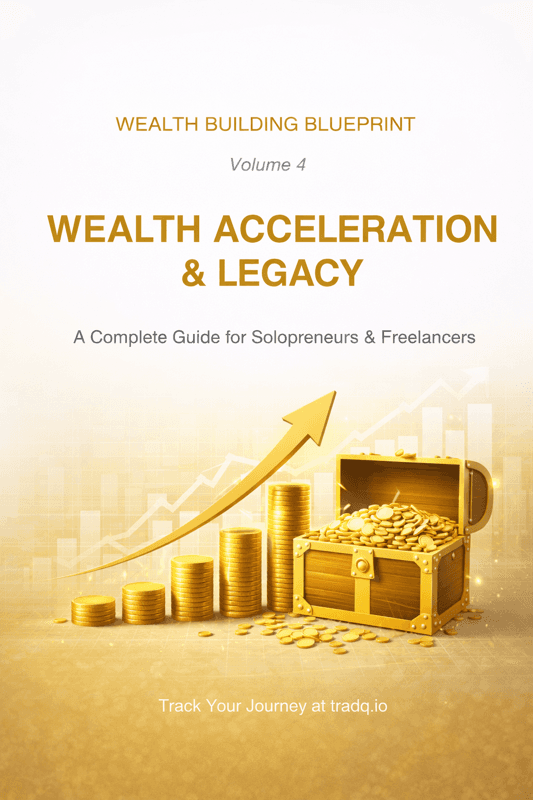
Wealth Building Blueprint Vol IV - Acceleration
Instant download · EPUB + PDF
Accelerate your wealth journey. Advanced strategies for rapid growth, leverage, and financial independence.
Apple Pay, Google Pay and card accepted
When NOT to Accelerate
Acceleration is powerful, which is exactly why timing matters. Do not accelerate before you have an emergency buffer, because a setback could force you to unwind everything at the worst moment. Do not accelerate while your cash flow is unmanaged, because leverage on an unstable base turns a normal bad month into a genuine crisis you cannot absorb.
In the rate and market climate of 2026, the pressure to chase faster growth is loud, but slow and safe beats fast and fragile every time the base is missing. Keep saving in a straight line until the foundation is solid, then accelerate deliberately. Knowing when not to press the gas is as much a part of building wealth as knowing how.
Frequently asked questions
Is saving or investing better for building wealth?
They serve different roles. Saving grows wealth slowly and safely, which is ideal for a buffer. Investing and acceleration bend the growth curve upward over time but carry more risk. The right answer is sequence: save to build a solid base first, then accelerate once that foundation is secure.
Why does compounding matter so much?
Because it changes growth from a straight line into a rising curve. When returns earn their own returns, wealth accelerates, slowly at first and dramatically over many years. The early gap between saving and compounding looks small, which fools people, then widens enormously the longer it runs uninterrupted.
When should I not try to accelerate my wealth?
Before you have an emergency buffer and managed cash flow. Accelerating on an unstable base multiplies risk rather than growth, and a setback could force you to unwind at the worst time. Keep saving in a straight line until the foundation is solid, then accelerate on purpose.
Want the whole series? the complete Wealth Building Blueprint bundle (4 guides in one download) or browse every Wealth Building Blueprint guide.
Before you buy, look inside:
Look inside Wealth Building Blueprint Vol IV - Acceleration →