What to Keep in a 72-Hour Emergency Bag (Europe)
By Clarity Books editorial team · 4 min read · Updated:
A European 72-hour emergency bag holds water, ready-to-eat food, a power bank, a torch, first-aid basics, copies of documents, cash, and medication. It matches the roughly three days of self-sufficiency EU guidance now recommends, so you can grab it and go with 112 as the emergency number across member states.
Why 72 Hours in Europe
European preparedness guidance has settled on a clear, memorable target: be able to look after yourself for around 72 hours. That window matters because three days is roughly how long it can take for official help to reach everyone after a major disruption, whether that is a widespread blackout, severe weather, or a supply shock. A bag built around 72 hours bridges that gap.
A grab-and-go bag, sometimes called a go bag, is different from your home reserve. It is a single pack you can lift and carry in seconds if you must leave, so it holds the essentials for three days rather than a full pantry. Keep it by the door or somewhere everyone knows, ready for the moment you cannot stay where you are.
The Grab-Bag Contents
Pack for three days of basic survival and communication. Include water and a few high-energy, ready-to-eat foods that need no cooking, a power bank with cables, a torch with spare batteries, and a small battery or hand-crank radio. Add first-aid basics, any essential medication with a copy of the prescription, hygiene items, and a change of warm clothing suited to your climate.
Then add the documents and money that are easy to forget: copies of identification, residence and insurance papers, and a written contact list in a waterproof pouch, plus cash in small denominations because card payments fail in an outage. Note 112, the single European emergency number, on the contact list. Keep the bag light enough to carry comfortably, because a bag too heavy to lift is no help at all.
See the Go-Bag Guidance in the Europe Guide
A list is a good start, but packing a bag that truly fits your household, with children, medication, pets, and your country specific risks, takes a fuller method. Ready For Anything, Europe Edition details the 72-hour go bag with guidance you can adapt to your own country, so your pack matches both the shared EU standard and where you actually live.
The guide connects the bag to your wider plan, so the go bag, your home reserve, and your family plan work together rather than as separate pieces. If you live or travel across several European countries, the Complete Ready For Anything Collection bundles every regional edition for less than buying them separately. Start with the Europe edition to build a go bag around the 72-hour standard and the common 112 number. This 72-hour bag guide is the quick start, and our Ready For Anything series turns it into a complete Europe household plan.
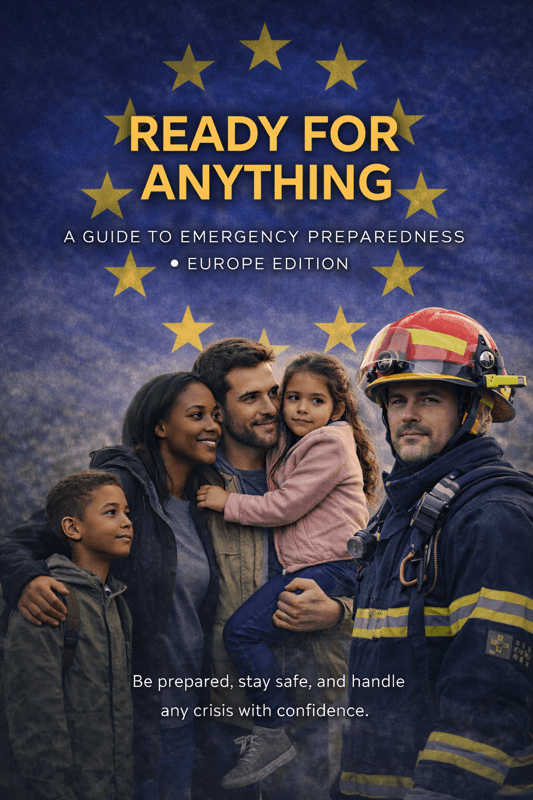
Ready For Anything - Europe Edition
Instant download · EPUB + PDF
A comprehensive guide to emergency preparedness tailored for Europe. Be prepared, stay safe, and handle any crisis with confidence.
Apple Pay, Google Pay and card accepted
Customise It per Country
The 72-hour core is the same everywhere, but the details should reflect your country and climate. In hot southern regions, add extra water, sun protection, and items for heat. In cold and northern areas, prioritise warm layers, a blanket, and a safe way to stay warm. Mountain or rural homes may add navigation and signalling items in case of isolation.
Tailor it to the people too. A bag for a family with young children needs different supplies than one for a single adult, and anyone with ongoing medication should pack a clearly labelled supply with a copy of the prescription. With the 2026 EU 72-hour recommendation now widely publicised, a go bag matched to your country and household is preparedness you can actually rely on.
Frequently asked questions
What is the difference between a go bag and a home emergency kit?
A go bag is a single, portable pack you can grab and carry in seconds if you must leave, holding about three days of essentials. A home kit is your larger reserve of water, food, and supplies that stays put. Most European households keep both: a go bag for evacuation and a home reserve for sheltering in place.
How heavy should a 72-hour emergency bag be?
Light enough that every person can carry their own comfortably, including children with a small pack. Prioritise water, food, power, documents, and medication over bulk. A bag too heavy to lift defeats its purpose, so test-carry it and trim anything you would not realistically take when leaving in a hurry.
Should the bag include cash and which emergency number?
Yes, pack cash in small denominations, because card and contactless payments fail during outages. Note 112 on your contact list, since it is the single European emergency number that works across every EU member state and reaches police, fire, and ambulance from any phone.
Want the whole series? the complete Ready For Anything bundle (3 guides in one download) or browse every Ready For Anything guide.
Before you buy, look inside:
Look inside Ready For Anything - Europe Edition →