The Law of Assumption, Explained Simply
By Clarity Books editorial team · 4 min read · Updated:
The law of assumption, taught by Neville Goddard, holds that your experience tends to follow the self-concept you live from, not the wishes you occasionally think. You practice it by assuming the feeling of the wish fulfilled and persisting in that state. Most people fail at the persistence, which is a structure problem, not a belief problem.
A definition without the mysticism
The law of assumption is a teaching from the mid-twentieth-century lecturer Neville Goddard. In one sentence: whatever you assume to be true of yourself, and feel as already settled, tends to shape how you perceive, decide, and act, and your experience follows that. The practice is to assume the feeling of the wish fulfilled, meaning you inhabit the identity of the person for whom the thing is already done, rather than hoping at it from a distance.
Stated as practice instead of metaphysics, it is a self-concept discipline. You are training the default story you tell about yourself, on the observation that people who quietly assume "I am the kind of person this works out for" carry themselves differently than people who assume the opposite. We present it that way deliberately: as a personal-development practice, not a guarantee about what the world will deliver.
Assumption versus attraction: the practical difference
The law of attraction, as popularly taught, frames the work as sending out the right thoughts so that like attracts like. The law of assumption shifts the center of gravity: nothing is being sent anywhere. You are not requesting an outcome from outside; you are revising who you take yourself to be, and letting behavior and perception reorganize around that.
The practical difference shows up in a bad week. An attraction framing tempts you to police every stray negative thought, which is exhausting and makes doubt feel like sabotage. An assumption framing only asks you to return to one settled state, the wish fulfilled, once a day, deliberately. One bad mood does not break anything; you just come back to the practice.
Self-concept: the part everyone underestimates
Goddard's sharpest claim is that specific desires sit downstream of one master assumption: your self-concept, the bundle of things you take for granted about who you are. "I am always behind," "things never quite work out for me," "people like me do not get that" are not observations, in this teaching; they are assumptions running on repeat, and they color everything you attempt.
That is why serious law-of-assumption practice spends more time on identity than on any individual goal. Change the self-concept and the individual desires get easier to hold; chase the desires while the self-concept contradicts them and you are fighting yourself nightly. This is also where the teaching overlaps with ordinary habit science, which reaches the same conclusion from the opposite direction: identity change drives behavior change more reliably than willpower does.
Why persistence fails, and what a fixed protocol fixes
The teaching has one famous requirement: persist in the assumption. And persistence is exactly where most practice dies, usually around day three. Day one runs on novelty and day two on momentum. By day three the novelty is gone, nothing visible has changed, and the old self-concept offers a familiar exit: see, this is not working. Deciding each night whether to practice is a fight the old identity usually wins.
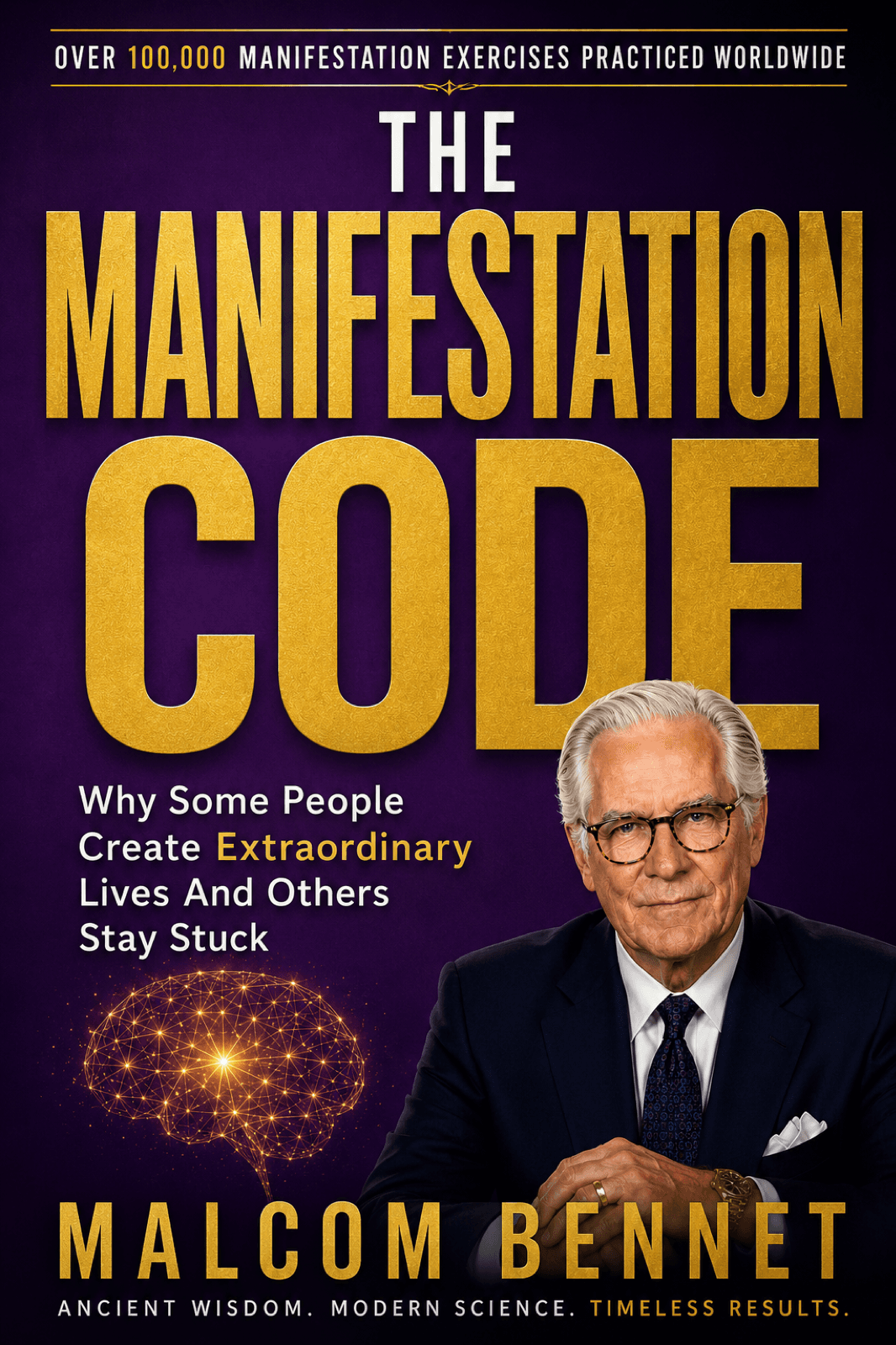
The fix is structural, not motivational. A fixed protocol decides in advance what you do each day and for how many days, so the nightly negotiation disappears. Our own Manifestation Code series is built around this: The Manifestation Code lays out the method, and the 33-Day Identity Install Workbook pre-decides each day and tracks small evidence along the way, because a recorded trail of minor shifts is what keeps a practice honest while the self-concept catches up.
The Manifestation Code - 33-Day Workbook
Instant download · EPUB + PDF
The 33-day companion that turns the method into a daily practice. Guided prompts, scripting pages and assumption drills that install the new identity until it holds on its own.
Apple Pay, Google Pay and card accepted
Frequently asked questions
Is the law of assumption the same as the law of attraction?
No. Attraction frames the work as drawing outcomes toward you with the right thoughts. Assumption frames it as revising your self-concept and living from the identity of the wish fulfilled. The daily practice and the way you handle doubt differ accordingly.
Do I have to believe in anything supernatural to practice it?
No. You can run the entire practice as a self-concept discipline: assume the identity, act and decide from it, persist on a schedule, and track what shifts. The behavioral core works the same whether you hold the metaphysics or not.
How long does the practice take before anything feels different?
Honest answer: it varies, and nobody can promise you a date or an outcome. What a fixed run such as 33 days gives you is enough repetitions for the new self-concept to stop feeling like acting, plus a written record of small shifts so you are judging the practice on evidence rather than mood.
Want the whole series? the complete The Manifestation Code bundle (2 guides in one download) or browse every The Manifestation Code guide.
Stuck on a manifestation? Start here.
Get the free 7 Manifestation Blockers Checklist: the patterns that most often stall a practice, named in one page.
No spam. Unsubscribe anytime.