Best Manifestation Books With Actual Daily Steps (2026 Picks + 33-Day Plan)
By Clarity Books editorial team · 9 min read · Updated:
After reading through the shelf this month, here is our verdict: the best manifestation books are the ones that give you a daily protocol you can follow without deciding anything, engineered persistence, and a way to track evidence. Books with all three are working manuals. Books with none are pep talks with a cover, whatever their reputation.
The inspiration problem most manifestation books share
I read through this shelf over the past few weeks, and the same complaint from the one-star and three-star reviews kept checking out in my own reading: beautiful ideas, no instructions. The reader closes the book moved and convinced, then wakes up the next morning with no idea what to actually do. Inspiration without a procedure is the default product in this category.
That gap matters because manifestation, taken seriously as a personal-development practice, is a consistency discipline. The work is showing up to the same self-concept practice daily, and a book that never specifies the daily work has quietly handed the hardest part back to you.
Three things to demand before you buy
First, a daily protocol: the book should tell you what to do today, in order, so the practice survives a tired evening. Vague advice to "raise your vibration" or "trust the process" does not count. Second, persistence engineering: most people abandon a new practice within the first few days, so the structure should remove the daily decision rather than rely on your motivation.
The persistence gap is measured, not anecdotal. In a Forbes Health/OnePoll survey of 1,000 US adults planning resolutions, the average resolution lasted just 3.74 months, with only 13 percent reporting past resolutions had survived four months (Forbes Health survey conducted October 2023, https://www.forbes.com/health/mind/new-year-resolutions-survey-2024/). Our claim is narrower than the habit literature but harder to argue with: a practice that must survive a nightly decision is competing with a measured failure pattern, and protocol design is how you remove the decision.
Third, evidence tracking: a written record of small shifts in mood, behavior, and circumstance keeps the practice honest and keeps you engaged with what is actually changing, instead of scanning for one big result. A book with all three is a method. A book with none of them is a pep talk with a cover.
Book-by-book verdicts: who each classic is for, and who should skip it
Neville Goddard, Feeling Is the Secret (1944). My verdict: read it first. It is the shortest honest statement of the law of assumption, and it is free or near-free, which is why the community reading lists keep naming it. Who it is for: anyone who wants the source teaching, not a coach paraphrasing it. Who should skip it: anyone who needs to be told what to do at 9pm tonight; it deliberately leaves the schedule to you.
One number explains this shelf: Rhonda Byrne's 2006 mass-market bestseller, the category's biggest commercial hit, sold more than 30 million copies worldwide (Wikipedia, citing Byrne's publisher figures, https://en.wikipedia.org/wiki/The_Secret_%28Byrne_book%29), while the books the forums actually recommend when someone asks for steps, Neville Goddard's Feeling Is the Secret (1944) and Joseph Murphy's The Power of Your Subconscious Mind (1963), are short, out-of-copyright or cheap reprints. The volume leader is the one with the least procedure; that is the gap this page exists for.
Persistence is where these books separate. In a Forbes Health/OnePoll survey of 1,000 US adults, the average resolution lasted 3.74 months, and only 13 percent reported past efforts lasting four months or more (Forbes Health, October 2023, https://www.forbes.com/health/mind/new-year-resolutions-survey-2024/). The books that survive contact with a tired Tuesday are the ones that pre-decide the daily session rather than rely on motivation; that is the second test below, and the one most of the canon fails.
Neville Goddard, the 1952 identity lectures. My verdict: the fuller identity argument, read second. Who it is for: readers who finished Feeling Is the Secret and want the state-shapes-perception argument chapter by chapter. Who should skip it: absolute beginners on a first evening; Feeling Is the Secret does the same job in half the pages.
Joseph Murphy, The Power of Your Subconscious Mind (1963). My verdict: the friendliest voice on this shelf, and the one most beginners actually enjoy. Who it is for: readers who want pastoral, how-to warmth and are comfortable with scripture-inflected language. Who should skip it: anyone who wants a dated schedule; it is a New Thought source text, not a protocol, and it will not tell you what to do on day 12.
The mass-market law of attraction introductions. My verdict: I skip them for this query, and I will tell you why. They are strong on the worldview and light on procedure, which is exactly the gap this page exists to close. Who they are for: readers who want to understand the idea before they practice anything. Who should skip them: anyone who already knows what they believe and is shopping for a structure to follow.
Modern habit-design books are not manifestation writing at all, but I flag them in every verdict because they engineered exactly what most manifestation titles skip: identity change through small repeated actions rather than motivation. If a manifestation book cites habit design, that is a good sign it takes the daily mechanics seriously.
33-Day Manifestation Challenge: What to Expect Week by Week
A 33-day run is the format most manifestation books gesture at and few actually schedule, which is why we walk it here rather than sending you elsewhere. Week one is the honeymoon: novelty does the work, and the risk is overcommitting to ninety-minute sessions you will not repeat. Keep the daily unit small enough to do on a bad day, roughly ten to fifteen minutes, and write down what you actually did. The only failure in week one is scheduling a practice you cannot sustain.
Week two is where the novelty dies and the structure has to carry you. This is the week people who followed a generic "raise your vibration" recommendation quietly quit. What gets you through is that the session is already decided: same scene, same script, same time, with a short written evidence log of mood and behavior shifts rather than a nightly check for results. Week three usually brings the first real-life frictions such as travel, illness, or a bad week at work, and the honest move is a shortened session rather than a skipped one, because a chain of short days beats a broken streak.
Week four and the final days are about making the identity stick rather than judging the outcome. We say plainly what a fixed run is and is not: it is repetition with the decision removed, and it is not a promise that anything external has changed by day 33. If you want the day-by-day version laid out for you, our 33-day challenge guide walks the same arc at /en/articles/33-day-manifestation-challenge-guide, and we do not pretend the structure itself does the manifesting.
Manifestation Books vs Apps and Journals (Which Builds the Habit?)
The honest comparison is by what each format actually optimizes for. An app optimizes for daily opens: streaks, notifications, and engagement, which are useful nudges but measure whether you opened the app, not whether the practice deepened. A template journal gives you pages but no schedule, so by week two you are deciding nightly what to write, and that nightly decision is exactly where practice dies. A book with a dated protocol pre-decides the session and gives the journal its actual job: tracking evidence, not generating prompts.
This is why a book is the better first buy for most beginners here. A book you re-read in seconds, annotate, and keep open beside your journal, at one purchase price and no subscription. The app has an honest role after the practice exists, as a reminder layer, not the main vehicle. For the format comparison in depth, including why a finite written arc tends to outlast an endless feed, see our workbook-vs-app guide at /en/articles/manifestation-workbook-vs-app, which applies these same tests to our own series and does not spare it.
Where The Manifestation Code's 33-day workbook fits
We sell in this category, so here is our own Manifestation Code series stated plainly rather than smuggled into a ranking. The Manifestation Code is our method ebook: the law of assumption decoded into a three-move sequence we call the Identity Install. The 33-Day Identity Install Workbook is the daily protocol companion, with each day pre-decided and an evidence tracker built in. The Complete Manifestation Collection bundles both volumes of the series.
Who it is for: readers who have read or will read the source texts and want the calendar decided for them, so the nightly decision is not a nightly fight. Who should skip it: readers who are happy to write their own 33-day schedule; if a self-built version of the same three pieces would get you to show up, use that. No results are promised here, because no book can promise outcomes: this is a personal-development practice, not a delivery guarantee.
They were written against the three criteria above because the criteria came first. Whether you choose ours or build your own routine around a classic, insist on a daily protocol, engineered persistence, and evidence tracking. The practice is the product; everything else is packaging.
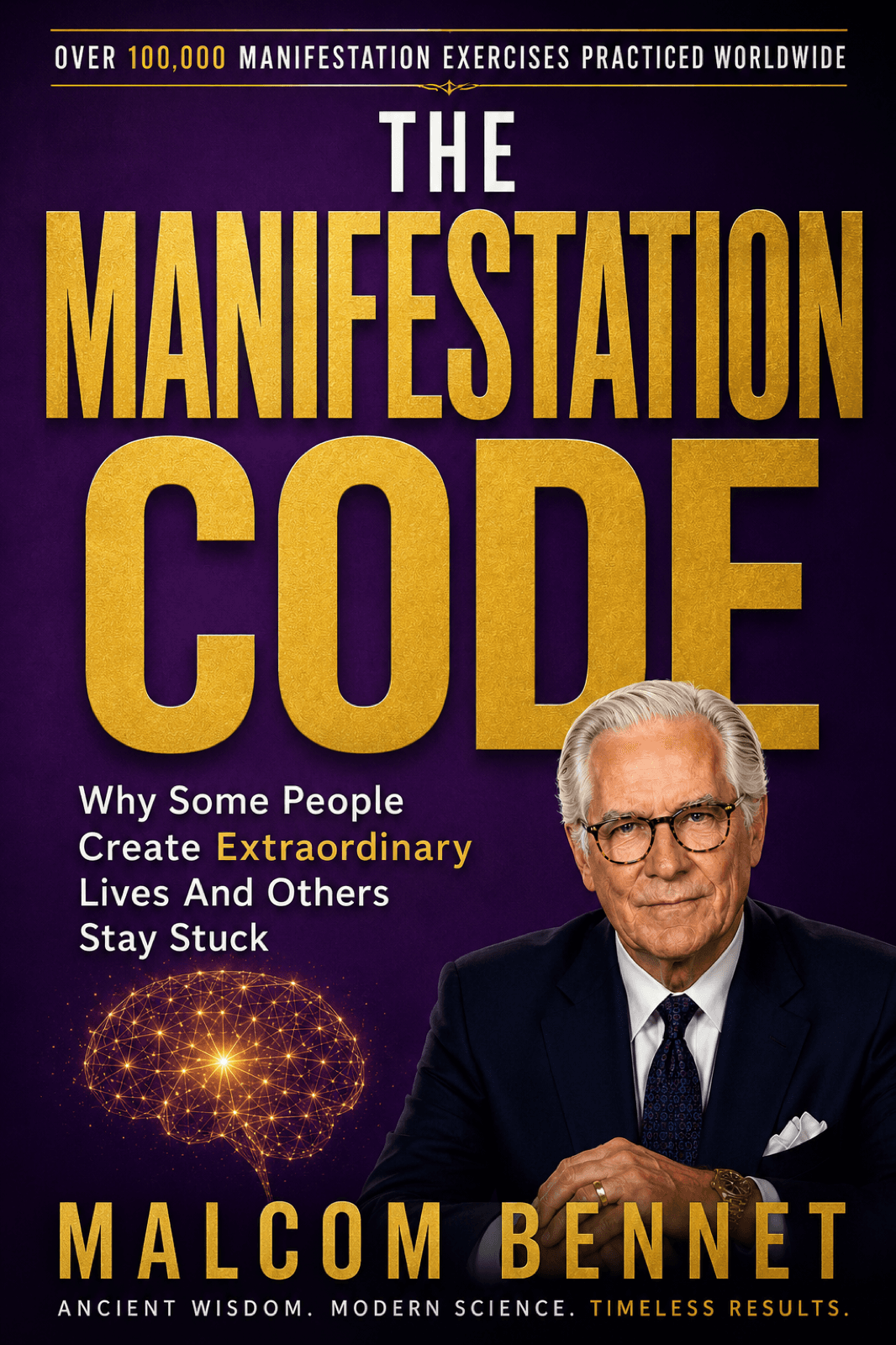
Complete Manifestation Collection
Instant download · EPUB + PDF
The Manifestation Code plus the 33-Day Workbook in one bundle: the full identity-install system, from the method to the daily practice that makes it permanent.
Apple Pay, Google Pay and card accepted
Frequently asked questions
What is the best manifestation book for a complete beginner?
Start with whichever book gives you a daily procedure you will actually follow, not the most famous one. A beginner needs structure more than theory. If a title cannot tell you what to do tomorrow morning, keep looking, however beloved it is.
Which free manifestation books are worth reading first?
The Neville Goddard short books, especially Feeling Is the Secret, are free or near-free and are the source most modern teaching draws on. Expect to supply your own daily structure though; the lectures teach the state, not the schedule.
Do I need a workbook as well as a book?
You need a daily structure from somewhere. A workbook is one honest way to get it, because it removes the nightly decision about what to do. A self-built routine works too if you will genuinely keep it; most people find a pre-decided format easier to sustain.
Are paid manifestation books a scam?
No more than any other category. The test is not price but content: a paid title must give you something the free canon does not, usually a dated protocol and an evidence tracker. Anything promising a specific outcome is the red flag, at any price, including our own shelf.
Want the whole series? the complete The Manifestation Code bundle (2 guides in one download) or browse every The Manifestation Code guide.
Stuck on a manifestation? Start here.
Get the free 7 Manifestation Blockers Checklist: the patterns that most often stall a practice, named in one page.
No spam. Unsubscribe anytime.